
The claim that Bitcoin mining creates an e-waste problem has never been robustly tested. On closer inspection, the Bitcoin e-waste accusation is itself, well, rubbish. This article shows what really happens to old Bitcoin mining rigs.
Let’s back up: e-waste is a real ecological issue. It’s not just the space it takes in landfills. It often contains toxic materials such as lithium and cadmium.
UNICEF has shown that e-waste can harm the health of children in the developing world.
With e-waste being an emotive issue, it’s even more important that we take a nuanced look at claims about Bitcoin mining and e-waste.
Unlike cellphones, Bitcoin mining rigs (ASICs):
- contain no toxic metals
- can be recycled easily and profitably, with no landfill waste
- are used for at least 2.76x as long as the average smartphone (5+ years vs 21.7 months)
However, you wouldn’t know this from past reporting. In 2021, many major media outlets picked up an article by Alex de Vries, a Central Bank employee and PhD student, called “Bitcoin’s growing e-waste problem”. The study, along with much of de Vries’ work, has since been debunked. However, the damage was done, and many still believe that Bitcoin poses a serious e-waste issue.
Among the flaws in the study that the media reported:
- de Vries claimed that Bitcoin mining rigs were used for 1.12-2.15 years. He gave this range without empirical justification. In fact, the actual life of a last-generation Bitcoin mining rig (the S19 series) has been shown to be over 5 years. De Vries’ assumptions were out by between 132% and 346%.
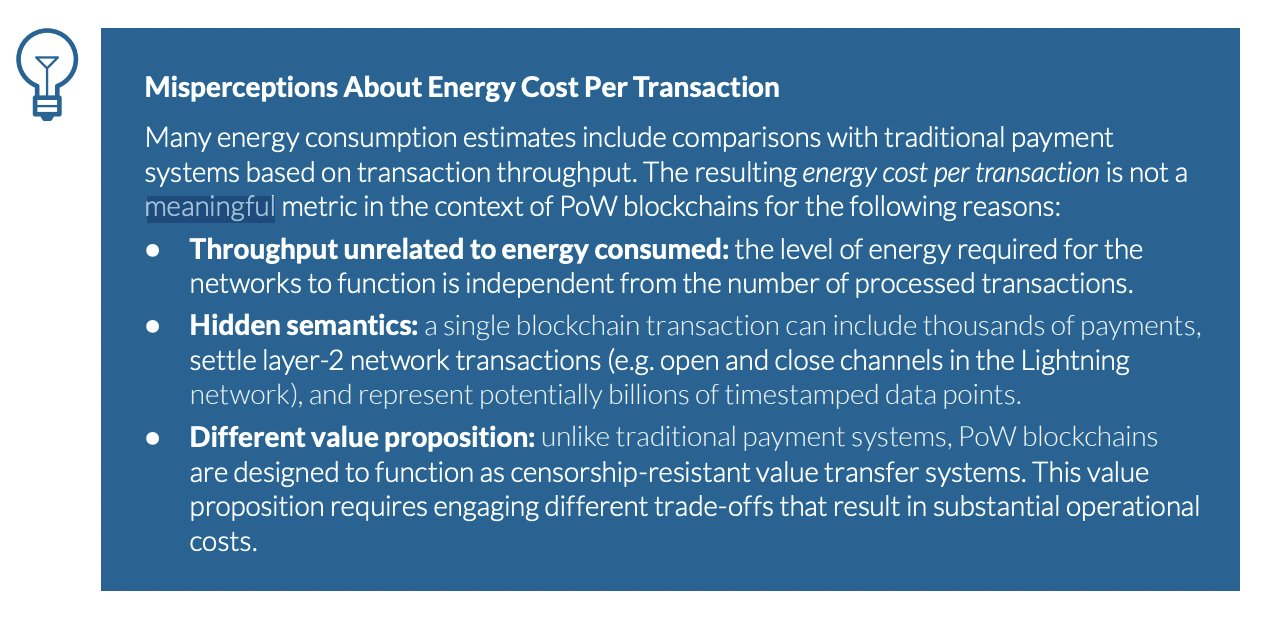
- de Vries applied the same widely debunked “per transaction” method he has also used for energy and water. Cambridge Judge Business School cited three fundamental flaws in the “per transaction” metric.
Bitcoin mining e-waste isn’t actually wasted
There’s a much more significant omission, which I only uncovered by accident when I was interviewing a senior member of an e-waste recycling company.
For the most part, Bitcoin e-waste isn’t actually wasted. Yes, you heard that right. Bitcoin mining e-waste is an oxymoron.
Only a self-defeating Bitcoin mining company would throw its old rigs into a landfill. Unlike much other e-waste, ASICs are profitable to recycle, and can even generate carbon credits.
Joseph Cimorelli explained what actually happens to retired Bitcoin mining rigs. He is Director of Global Business Development at ERS International, a global electronics reuse and recycling company headquartered in Toronto.

ERS already has contracts with 5 of the top 11 Bitcoin mining companies in the world, and reports that most of the big players are “receptive to having a sustainable strategy in place to handle mining rigs that have been deemed obsolete.”
The reason is the same reason that Bitcoin mining companies generally use sustainable energy sources: it’s more profitable to “do the right thing”.
Hut 8, for example, expected to generate 7,500 carbon credits from its 2023 recycling of e-waste. According to Cimorelli, mining companies can even share in the money earned from selling material for recycling.
It’s a fast process too. In 2023, over just 3 weeks, Hut 8 collected 369 metric tonnes of e-waste: mostly obsolete ASIC miners, but also hash-boards, cables and other components. These materials were either sold to third parties for re-use or recycled. Importantly, Cimorelli confirmed that none of the materials were sent to landfills. Perhaps we should create a new sticker for ASICs?
Cimorelli explained: “Recycling miners is easier to handle [than other e-waste] because most mining rigs are cased with recyclable aluminum or steel, and the hardware contains precious metals and resources that can be extracted and reused. Even the chips on the boards are recyclable due to the nature of what’s under them or a part of them. For instance, they can contain silver, gold, steel, aluminum or nickel.”
Bitcoin e-waste gets far more media attention than other e-waste. So I asked him whether Bitcoin mining rigs contain as many toxic materials as other electronics. His answer surprised me:
“Given the way the machines are manufactured, we don’t find toxic metals in such machines. The most toxic material is the fans because they are plastic now.”
“As far as the ASICs go, we process the hashboards further for the metals. What’s left over we pulverize into almost a fine powder for further processing. We have a lab in our Toronto facility that extracts gold, other precious metals, as well from some of the boards,” Cimorelli confirmed.
The plastics or fiberglass (or a mix of both) left on the boards then get sent downstream to certified smelters and refiners.
The most toxic thing is plastic? That’s a different message to the current narrative.
He also mentioned that “the industry is slowly shifting to [immersion] cooling, which will eliminate that entirely down the road.” The move to immersion cooling is also reducing the noise from ASICs.
Innovations in recycling have made ASIC recycling even easier. New AI technology now identifies materials at the molecular level for cleaner sorting in industrial and electronics recycling. The main benefit is in sorting plastics, but it can be applied to many other areas.
Old rigs keep working for years
I then spoke to several Bitcoin mining companies, who said that even after 5-6 years, they will often keep using mining rigs before sending them to be recycled.
In 2021, Nic Carter confirmed that as mining companies bought the then new S19s to mine “around the clock”, they often redeployed old S9 rigs to sites powered by intermittent energy sources such as solar and wind.
The logic: this electricity was often cheaper because it was surplus energy that would otherwise have been wasted. So it made sense to mine with old S9s, which would not be profitable around the clock because of their lower hashrate. Equally, it did not make sense to confine a new machine to a job that only allowed it to mine 10 hours a day.
Today, the same pattern is occurring. Several of the mining companies I spoke to mentioned that they are now looking to redeploy old S17s to do the job the S9s did in the last cycle. The S9s are finally being recycled, in some cases a full 8 years after their mid-2016 release.
Old rigs as load banks
There’s yet another option. Old Bitcoin mining rigs can also be used as “load banks”. What’s a load bank? It’s probably the only piece of equipment ever designed for the sole purpose of wasting electricity.
Why would anyone want that? Sometimes, renewable generators are asked to curtail energy suddenly. Powering down can cause wear and tear. So many renewable operators prefer to send some of that power to a load bank, which does nothing other than chew up surplus electricity.
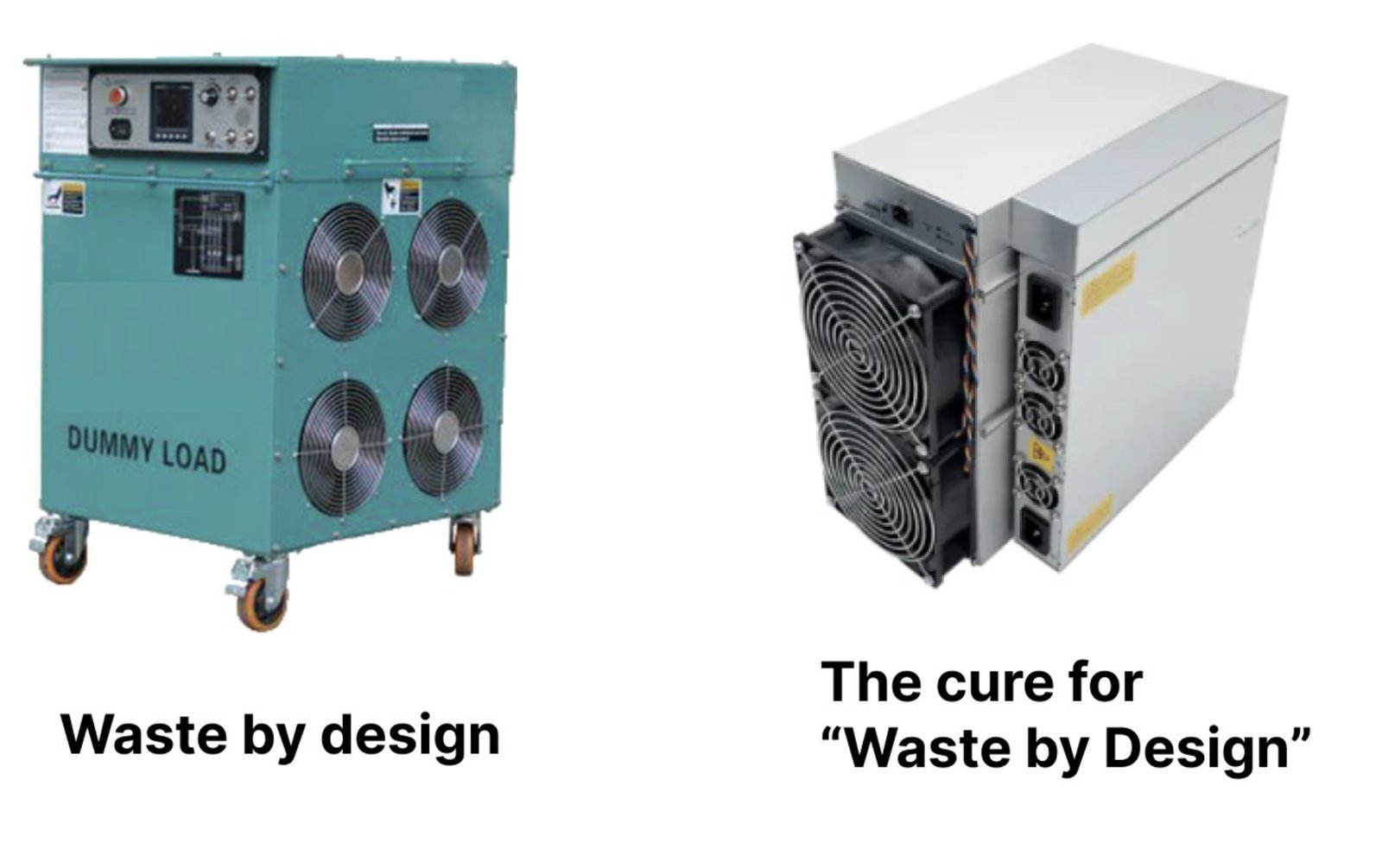
A 500kW load bank will set you back $28,490 and is a more challenging e-waste conundrum than any Bitcoin mining rig. When renewable operators use obsolete Bitcoin mining rigs as a load bank instead, it’s cheaper for them and better for the environment. And they can earn Bitcoin.
Summary
Trying to slap the e-waste complaint on Bitcoin mining rigs is gaslighting. The rigs are one of the few pieces of electronics that do not present humanity with an e-waste challenge. Unlike some consumer electronics, they:
- last much longer
- don’t have toxic components
- can replace other wasteful pieces of equipment, even in “retirement”
- can be recycled easily and profitably, with no residual landfill waste
For more on the e-waste claim and other common claims about Bitcoin and energy, read Common Bitcoin energy misconceptions.
First published in the Batcoinz newsletter, July 2024.
Pingback: Bitcoin energy use: common misconceptions, with the data
Pingback: The new (data-backed) story about Bitcoin mining - Batcoinz
Pingback: The role of Bitcoin mining in climate action - Batcoinz