

What if Bitcoin revolutionizes energy as much as it does money, and solves the energy trilemma along the way?
What if the impact of Bitcoin’s energy revolution was as positive to humanity as the impact of Bitcoin’s monetary revolution?
What if right under our noses Bitcoin’s impact on energy was already as big as Bitcoin’s impact on money?
When Satoshi created Bitcoin, he birthed not just a monetary revolution, but the twin revolutionary forces of a new approach to money and a new approach to energy.
While Bitcoin’s monetary revolution was by design, the energy revolution is by accident. For this reason, it often doesn’t get the same coverage and attention.
This accidental Bitcoin revolution is already showing signs of reshaping humanity in a way that has the potential to impact all of our lives.
In this article, I cover the five reasons why convergence between energy and Bitcoin mining is happening at pace.
Let’s get started:
Lyn Alden’s book Broken Money argues that our monetary system has deep structural flaws. Our energy systems have structural flaws too.
First, some context on energy and grids:
Unlike the Internet, energy needs wires to transport. Lots of them.
Unlike a digital nomad using the Internet to live freely anywhere in the world, energy is a prisoner of time and space.
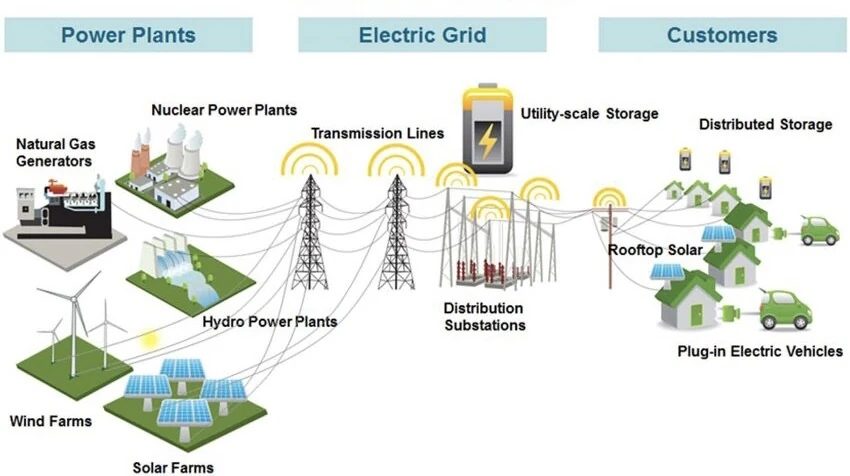
Energy cannot be effectively stored at scale (even with batteries) for more than four hours.
Energy cannot be efficiently transported either. Officially, transmission and distribution lose around 8% of the world’s electricity, but the real figure is higher.
Energy-generation also cannot be effectively coupled with the energy-use at the right time of day, leading to massive peaks and troughs in energy demand.
When old, centrally architected grids meet aggressive decarbonization and energy scale-up goals, we see five ways in which the systems we use to distribute energy are broken. Bitcoin mining is already fixing each of them, and at pace. Here’s how.
1. Centralized
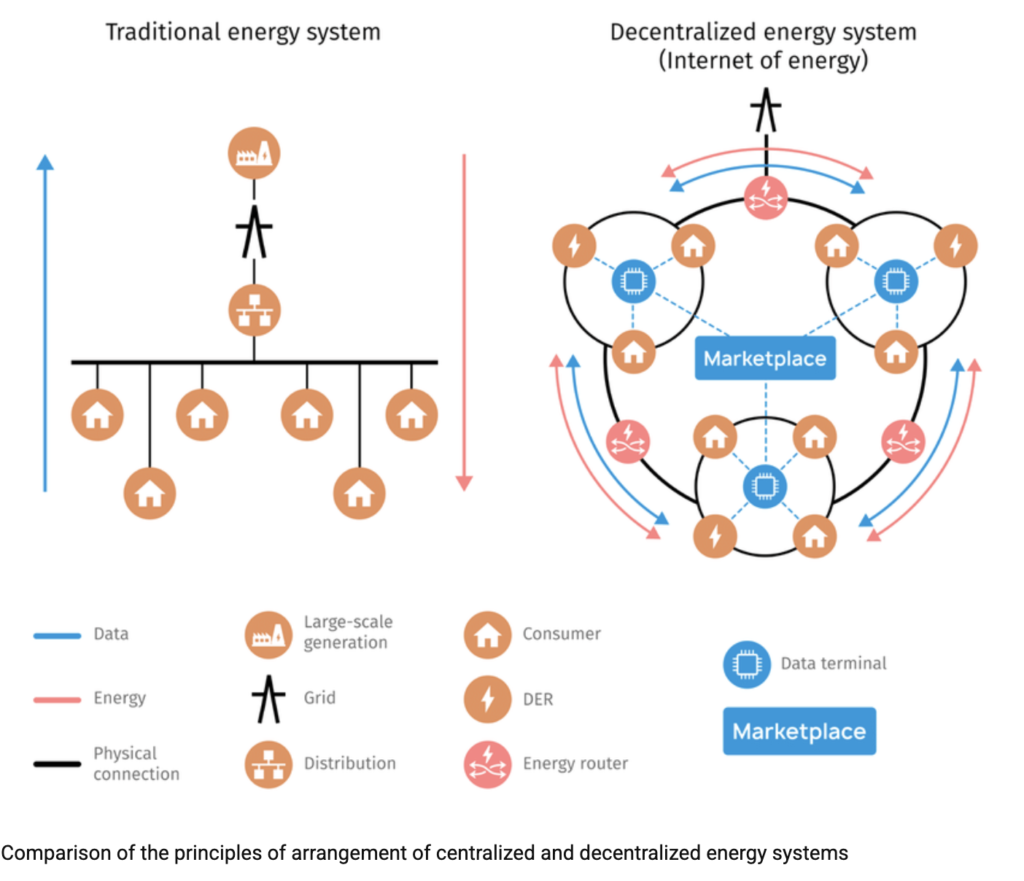
Like financial systems, today’s energy transmission and distribution systems are highly centralized. Grids are like the energy equivalent of a central bank: they are inefficient at getting resources to people who need it equitably. Micro-grids (small local grids) are the solution. But historically, the challenge has been that with a smaller population being served, the statistical chance of power being generated at a time people don’t need it is even higher.
How Bitcoin accelerates development of decentralized energy systems
Bitcoin solves this problem, because when people don’t need power, you simply mine Bitcoin. That pays off the micro-grid faster while lowering the cost of power to micro-grid users.
This beneficial impact is not theory. It is exactly what Gridless has already shown is possible in rural Africa, where its mining sites had brought power to 8,000 homes in Kenya, Malawi and Zambia by 2024.
Having proven this works in theory and in practice, there is now no barrier to scaling the renewable-microgrid/Bitcoin mining hybrid solution throughout Africa. Ultimately this isn’t just a solution for Africa, decentralization could in decades to come be the global way that energy is delivered. It would be both possible and poetic that a decentralized monetary system were the catalyst for the decentralization of energy systems.
2. Subsidized
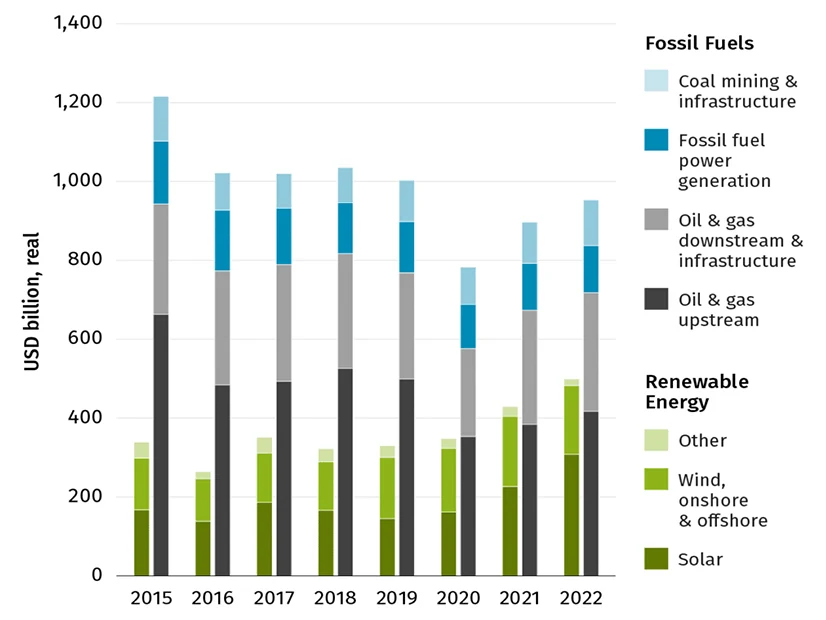
Solar is a cool technology. What’s more intuitively appealing than capturing the abundant energy of the sun! It’s efficient, renewable, zero marginal cost power.
But have government subsidies for solar worked? There’s a litany of examples of where Government solar subsidies have led to heavily under-used, unwanted, untransportable, or even obsolescent solar farms. This has happened across the world, including the EU, Northern Territory Australia, Spain, Texas, China, India, South Africa, Chile and Finland. Aside from the wasted energy, more than 2,750 GW of renewable energy is stuck in interconnection queues (waiting lists to connect to the grid) in just 10 jurisdictions. Europe alone has 1,700 GW of renewable projects waiting to connect, and the US almost 1,000 GW of solar and wind.
How Bitcoin offers governments a subsidy-free future, while fixing the problems that existing subsidies created
Bitcoin mining fixes each case mentioned above. It does this by buying up wasted/ stranded solar energy that got overbuilt in the wrong places due to government subsidies. Bitcoin mining also helps politicians by making short-sighted political decisions around subsidies look smart after the fact.
Nowhere is this more apparent than in Texas.
Texas got solar subsidies through Federal tax credits (e.g. Roserock Solar Farm, 328 MW).
Before Bitcoin mining came onto Texas’ ERCOT (Electric Reliability Council of Texas) grid, solar and wind farms were under-utilized due to
1. Grid Constraints: Congestion in West Texas limits solar export to cities like Dallas
2. Curtailment (cutting the output of solar or wind farms when the grid can’t take their power): Solar farms in the Permian Basin compete with wind and fossil fuels, leading to wasted energy during low-price periods
3. Market Volatility: Subsidies encouraged overbuilding, but falling power prices reduce profitability
Because of this underutilization, pressure mounted to stop producing more wasteful solar (and wind farms). But in 2021, Bitcoin mining companies entered onto the grid and started buying the solar and wind energy that no-one else wanted. Sometimes they co-located on the solar or wind farm. At other times they provided a buyer for that otherwise wasted renewable energy. Then they helped counterbalance their intermittency once on the grid. These three factors helped solar and wind farm generators lift their generation capacity on ERCOT’s grid from 33.6 GW in September 2021 to 80.5 GW in July 2026.
Meanwhile, Brad Jones, ERCOT’s former interim CEO, has said that 3 GW of flexible Bitcoin mining demand was part of what enabled that expansion. Peer-reviewed research shows why. Lal and You found that Texas had more to gain than any other US state: 32 planned renewable projects in Texas could earn combined profits of $47 million by mining Bitcoin before they began commercial operation. In a second study, published in PNAS, Lal and You found that Bitcoin mining enables capacity expansions of up to 25.5% for solar and 73.2% for wind. Another peer-reviewed study, in Heliyon, showed that a 50MW solar farm would normally take 8.1 years to become profitable, but using Bitcoin mining it could reduce this to a mere 3.5 year payback. Like all responsible business owners, the solar generator would use profits to expand their operation.
3. Politicized
Today, what does the political left care more about?
- environmental security (and to an extent energy equity)
What does the political right care more about?
- energy security
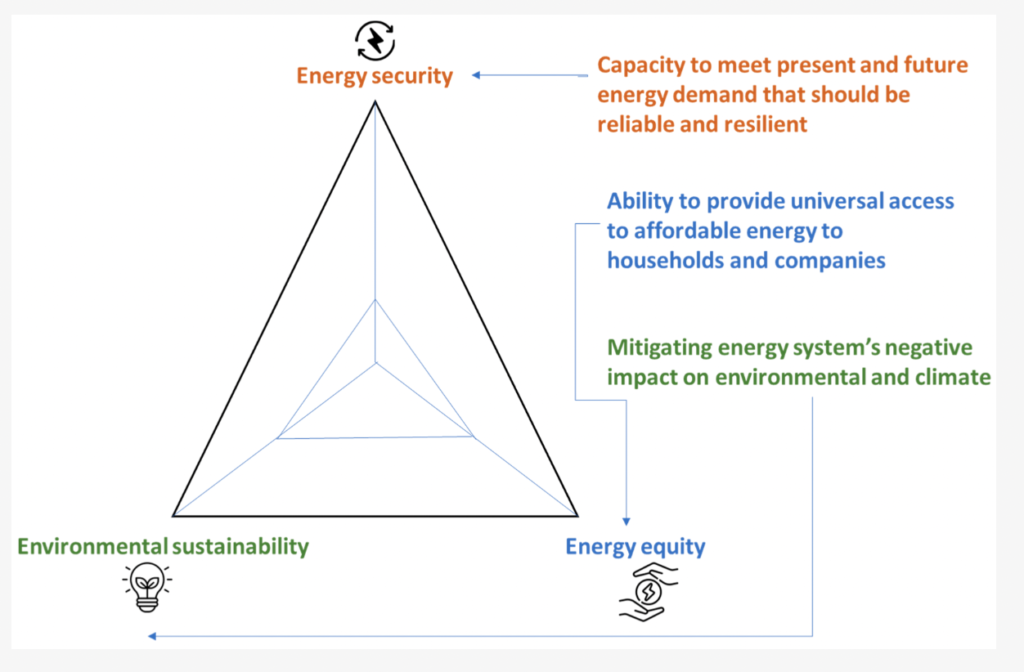
It didn’t use to be this way. In the 1980s, Conservative Prime Minister Margaret Thatcher spoke actively about climate change and stated the UK must move beyond coal. By contrast, on the political left, prominent figures in the British Labour Party including both leader Neil Kinnock and former leader Michael Foot argued that coal was a vital source of jobs, vital to the economy, and vital to UK’s energy security following the 1973 oil crisis.
So while these alignments are tribal, which tribe aligns with which set of arguments can and has changed radically over time.
I recently wrote about how the decarbonization policies of today’s left and the energy security policies of today’s right have been implemented in a in ways that undermine their own goals.
Until we look for solutions that combine the best of what the left and right want, we will continue to yo-yo between the decarbonization goals of the left and the energy security goals of the right. Ultimately, both will fail to adequately deliver either goal.
How Bitcoin is a non-partisan tool for decarbonization and energy security
Without a tool, the paragraph above that you just read is just ideological hope. Bitcoin is the tool that turns the statement from ideological hope to implementable reality.
Bitcoin increases energy security by making local sources of power generation more profitable. But Bitcoin also allows us to profitably decarbonize at the same time, in ways which include:
- accelerating the renewable energy transition (Lal et al, 2023)
- obviating the need for carbon-intensive gas peaker plants (Bruno et al, 2023)
- stabilizing the grid while it scales to handle more renewables (Rudd et al, 2023)
- halving the payback time for solar farms (Hakimi et al, 2024)
- accelerating renewable microgrid development (Moghimi et al 2024)
- reducing methane emissions from landfills (Sechrest et al, 2024)
These are not ideal theoretical possibilities, these benefits exist right now. I’ve documented the numerous case studies where they’re occurring in this longer article.
4. Fossilized
By fossilized, I don’t mean fossil-fuel based grids, I mean grids that are really old.
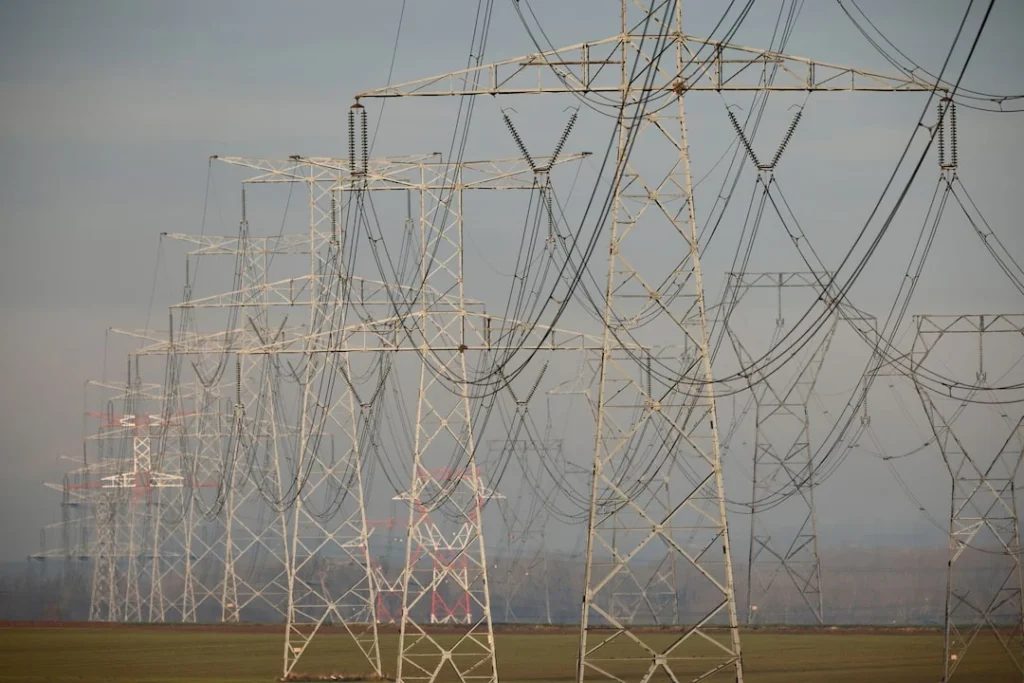
How bad is the situation? Well, imagine there’s no wireless cell phone network and all communication must be done over a wired landline phone network that hasn’t been maintained or upgraded for 30 years: that’s our modern energy infrastructure. It’s fossilized, under-maintained and in no position to handle additional load, or additional variable renewable energy (VRE) generation.
That’s the state of grids in much of the world. In advanced economies, more than half of grid infrastructure is over 20 years old, according to the IEA (International Energy Agency).
But does this have an impact? The short answer is “yes.” It fundamentally impacts how much new VRE can be placed on them, a phenomenon that has been widely covered in mainstream media.
Many grids are struggling to meet today’s capacity, let alone the much harder future demands placed on grids by the more constant load balancing (matching power use to the power available) needed when you have high concentrations of VRE (solar and wind) on them.
How Bitcoin proves an almost cost-neutral fix to the issue of aging grids
Bitcoin mining has been shown to largely, if not completely, remedy the issue (Norris et al, 2025) of load balancing new VRE, avoiding the expensive grid-upgrade costs that would otherwise be incurred in order to handle more intermittency. In short, Bitcoin mining is a hack that means you can put more VRE onto even an aging grid, without astronomical upgrade costs. In fact, it’s the most cost-effective way you can put more VRE onto an aging grid without astronomical upgrade costs. Flexionics, led by CEO Bipin Patel, uses Bitcoin mining hardware to help stabilize Sweden’s grid. By its own figures, its flexible mining units cost $250,000 per MW to install, against $500,000 to $1 million per MW for battery storage. And while batteries can support the grid for 1 to 4 hours, the mining units can do so for as long as needed.
5. Wasteful
On the grid, wasted energy is normally renewable energy: either it’s solar or wind produced at a time of day when people don’t want it, or a part of the country where people aren’t around to use it. Then there is hydro, which in the rainy season of many nations, including Norway, New Zealand, China and Costa Rica, simply flows over the top of the dam on a seasonal basis.
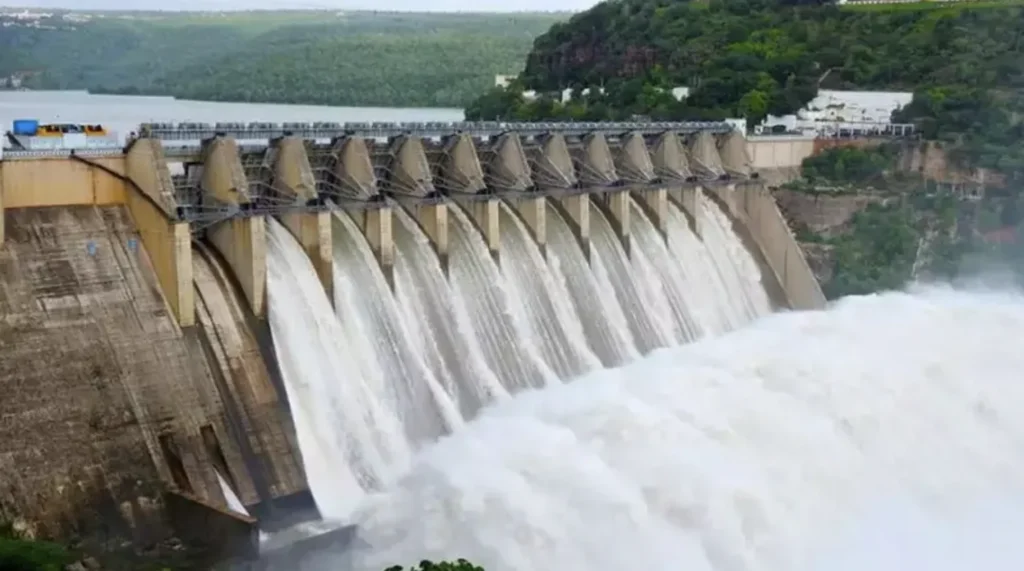
While batteries and pumped hydro are part of the solution, they are not the whole solution. Batteries will only store for 4 hours (not much use if you have surplus wind during a storm for 96 hours). And due to topographical issues, pumped hydro is only a solution for a small subset of hydro-dams.
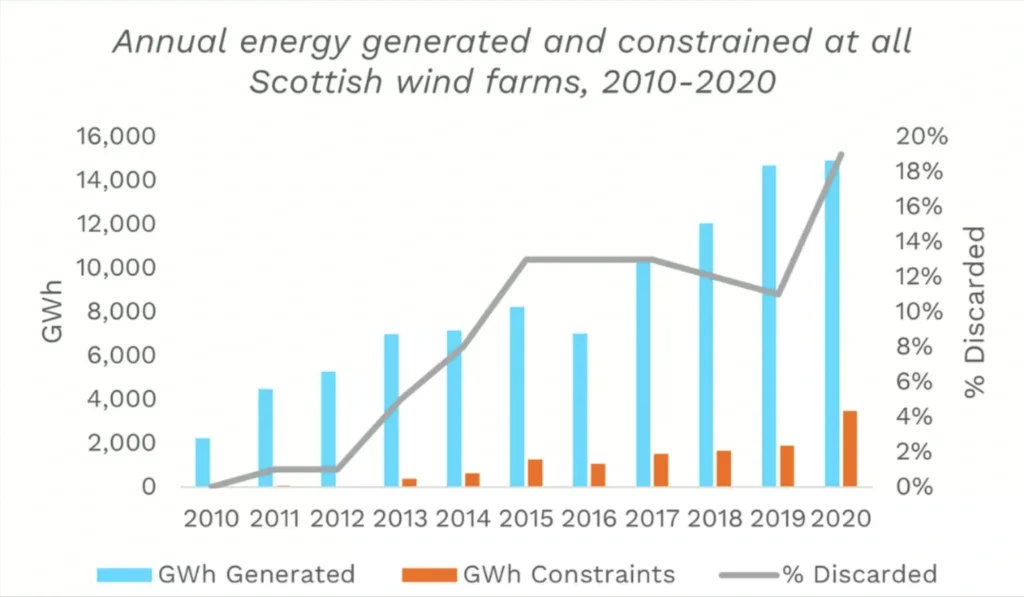
What this means is, without a flexible user of energy, all this renewable power will continue to be squandered. For example in the UK, Scottish Wind farms now waste 20% of their energy.
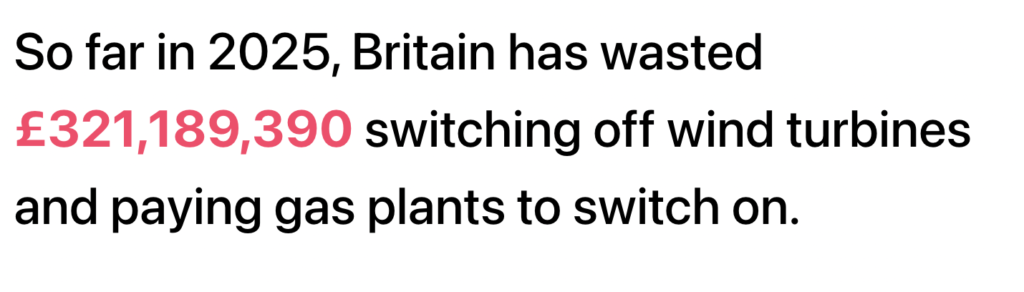
What is the cost of this? Enormous. One site, Wastedwind.energy quantifies how much wind energy alone the UK wastes on a daily basis. Just 78 days into 2025: $417 Million of wasted power.
How Bitcoin prevents the wasting of renewable energy
Pavel Grachev calculates that Bitcoin could not have stopped the expense of needing to fire up gas plants. But, he calculates, had wind farms been used for Bitcoin mining rather than curtailed, it would have turned a $70.6 Million curtailment cost to the grid into a $91.5 Million Bitcoin mining revenue opportunity. Plus, by dealing with renewable intermittency at the front end of the queue, there could be even more renewable energy on the grid, which would have further reduced expenses by meaning fewer gas plants were called upon.
As we saw in the section on subsidies, this is not a fantasy: since 2021, Bitcoin mining companies helped catalyze an extra 47 GW of wind and solar capacity on ERCOT’s grid alone.
Summary
As we can see, the areas where Bitcoin mining is solving major systemic issues with the grid are both wide and deep. Both peer-reviewed research and real-life case studies have showcased how Bitcoin is able to overcome the challenges of our current energy system which is centralized, subsidized, politicized, fossilized and wasteful.
These are the five reasons that the energy sector needs Bitcoin mining. There are also economic drivers that mean Bitcoin mining companies need to become energy companies. Together, these pull and push factors are the reasons that convergence of Bitcoin mining and energy are happening rapidly.
“The wise do not desire to do anything, and the wise do not desire to abandon action either” ~ Yoga Vasistha
This article was first published in The Bitcoin Adoption Letter in March 2025.